

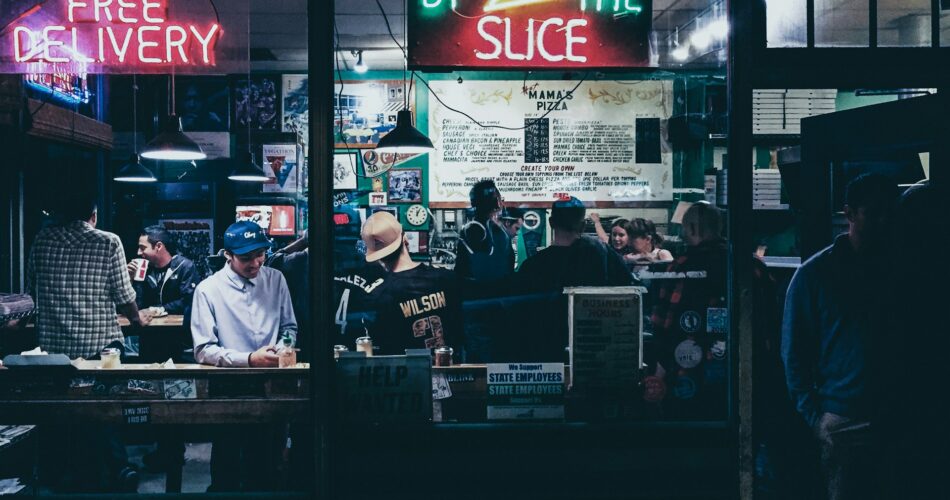
A routine dinner rush at Rosco’s Pizza in Union, Michigan, took an unexpected turn when manager Shanna Crice answered a phone call that seemed unusual at first.
The small-town restaurant was busy handling orders from customers at the counter and over the phone when a woman called and asked whether the restaurant had any food it planned to throw away at the end of the night. Crice explained that Rosco’s generally prepares pizzas after they are ordered, so there typically isn’t much leftover food.
The caller didn’t explain why she was asking. The conversation ended quickly, and Crice returned to work.
But as the evening continued, the question stayed with her.
Crice later told her coworkers about the call, and the staff began wondering whether the woman might have been looking for something to eat. Crice immediately regretted not slowing down long enough to ask more questions.
The thought followed her while she was making deliveries. She even discussed the situation with Troy Allen, her boyfriend and the person who purchased Rosco’s the previous year. They wondered whether there might have been a way to help the woman beyond simply providing leftover food.
Crice couldn’t identify the caller’s number among the many calls the restaurant had received that evening. So she came up with another idea.
Rosco’s occasionally uses its Facebook page to advertise discounts on pizzas that were made incorrectly or couldn’t be sold as originally intended. Crice decided to use the page to reach out to the mystery caller.
She wrote a post explaining that she had received an unusual call and had realized afterward that there might have been more behind the question than she initially understood. She invited the woman to call the restaurant again so they could have a different conversation.
Crice had no idea what would happen next.
The post quickly spread far beyond Union. Thousands of people began sharing and commenting, with attention coming not only from across the United States but also from other countries.
Many readers praised the restaurant for taking the situation seriously and looking for a way to help. Others began offering practical suggestions for helping people who may be struggling to afford a meal.
Some recommended food-rescue services that allow restaurants to sell excess food at reduced prices rather than discard it. Others suggested creating a system where customers could purchase meals in advance for people who need them.
One idea caught Crice’s attention: a community meal board.
The concept is straightforward. Customers purchase a meal ahead of time, and the restaurant places a ticket on a designated board. Someone who is hungry or going through a difficult period can then claim one of the donated meals.
Before long, people weren’t simply suggesting the idea online. They were calling Rosco’s and asking how they could contribute.
Crice quickly ordered a bulletin board and began setting up the program. Within about a week, the restaurant had its own meal board, with $10 meal donations represented by heart-shaped stickers identifying where contributors were from.
The donations started arriving from places across the country and even overseas, including several states and countries in Europe.
While the online response was enormous, Crice also wanted the program to benefit people in her own community. She contacted local schools and churches and let them know that families who needed assistance could be directed to the restaurant.
What began with one unexpected phone call had turned into a much larger effort.
For Crice, the most powerful moment came when she finally had time to stop during the busy pace of running the restaurant and look at the growing collection of donated meals.
The board had become a visible reminder that a simple act of concern can sometimes lead to something much bigger. What started as an unanswered question from an unknown caller had brought customers, strangers and communities together around a practical way to help someone who might simply need a meal.


Nice of those who contributed to help others.